
The island of Madagascar is hugely rich in biodiversity with over 80% of its species found nowhere else on Earth. Yet much of this abundant biodiversity is now endangered by deforestation, with over 90% of the country’s rainforest already destroyed.
The Ifarantsa District in Southeastern Madagascar, was once forested. Now, due to the impact of slash-and-burn agriculture, it takes over 2 hours walk to reach whatever forest is left. As is the case across the humid tropics, 20 years of slash and burn has exposed the fragile soils and made it increasingly more difficult for the local farmers to feed their families. These farmers know that to continue to put food on the table, they must switch to sustainable farming techniques. Currently, they have nor the resources nor the knowledge to do so.
This is where the Homaray Project comes in. It grew out of the vision of two local Malagasy men, Davis Randriamampionona and Rubin Ravelonandrasana, and their desire to turn around the declining fortunes of their fellow farmers by helping develop the new sustainable farming techniques they so urgently need.
We are now working with Davis and Rubin to introduce our decades of expertise in alley cropping to Ifarantsa, providing food security for local families and halting rainforest destruction.
The Crucial First Step
As the Inga tree is not native to the area, our first task is to identify an appropriate native tree species to fulfil the same role. Once a suitable species has been found, the Homaray Project’s main focus will be introducing the farmers of Ifarantsa to the logic, benefits and techniques of alley cropping.
Our Director Mike Hands has pooled his knowledge with that of experts from Kew Gardens and Madagascar’s Ministry of Forestry, to compile a list of possible candidate species for alley cropping in Ifarantsa.
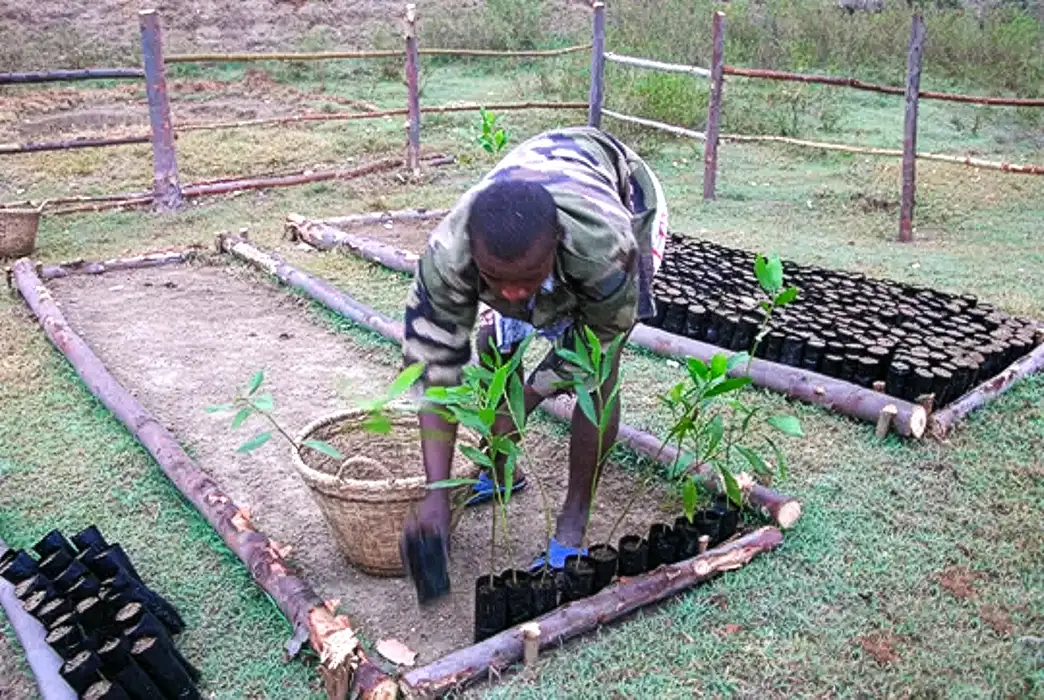
Trails for 3 of these candidate species have now been started on the project’s 3.5 hectares of land and the young trees are already over 6ft tall. Davis will be expanding the trial plots to include as many of the other candidate species as possible in the near future.
Future Aims
- To establish a tree nursery in order to supply the seedlings farmers will need to make the transition from slash and burn to alley cropping.
- We would like to tackle the other causes of deforestation, the most significant of which is making charcoal. For many families, selling charcoal in towns and cities is their only source of income. With firewood for cooking and house-building materials also coming from the forest, the pressure on what is left (including Madagascar’s endemic palm, mounts from every side. also comes from the forest, as do house building materials, which include palm fronds from Madagascar’s endemic Traveller’s Palm.
In answer to these needs, we aim to set up a sustainable communal forest, giving families a sustainable and renewable source of crucial materials and relieve pressure on what forest remains. - As we have proved is possible at scale in Honduras, we aim to reforest areas of Ifarantsa using leguminous and native trees, helping local diversity begin to recover.
If we can achieve these three aims, it will make a huge difference to both the biodiversity of Ifarantsa and to the lives of the local families. But to do this we need your support – without your donations it won’t be possible.